
Colorado State Income Tax: Rate, Filing Rules, and Deductions 2026
Wednesday, Jul 29, 2026
· by Alexander Caldwell – Financial Expert
Colorado uses a flat individual income tax rate of 4.4%. The finalized rate for the 2025 tax year is 4.4%, and Colorado’s official 2026 estimated tax form also instructs taxpayers to calculate estimated income tax using a 4.4% rate. Colorado taxable income generally begins with federal taxable income and is adjusted through state-specific additions and subtractions.
Colorado residents generally pay tax on income from all sources. Part-year residents pay tax on income received while they were Colorado residents and on Colorado-source income received while living elsewhere. Nonresidents generally pay Colorado tax only on Colorado-source income.
Colorado State Income Tax at a Glance
| Tax itemCurrent rule | |
| Individual income tax rate | 4.4% |
| Tax structure | Flat income tax |
| State return | Form DR 0104 |
| Part-year and nonresident schedule | Form DR 0104PN |
| Estimated tax threshold | More than $1,000 expected net tax |
| Estimated tax calculation rate for 2026 | 4.4% |
| Pension subtraction, ages 55 to 64 | Up to $20,000 |
| Pension subtraction, age 65 or older | Up to $24,000 |
| Military retirement subtraction, under age 55 | Up to $15,000 |
| Colorado EITC for 2026 | 25% of the qualifying federal credit |
| Statewide personal city income tax | Generally none |
| Local employment taxes | Possible occupational privilege taxes |
Colorado does not use separate state tax brackets for single, joint, or high-income filers. The same basic 4.4% rate applies after Colorado taxable income has been calculated.
Does Colorado Have a State Income Tax?
Yes, Colorado imposes an individual state income tax on residents and on qualifying Colorado-source income earned by nonresidents.
The tax can apply to:
- Wages and salaries
- Bonuses and commissions
- Self-employment income
- Business and pass-through income
- Interest and dividends
- Rental income
- Capital gains
- Taxable retirement distributions
- Gambling winnings
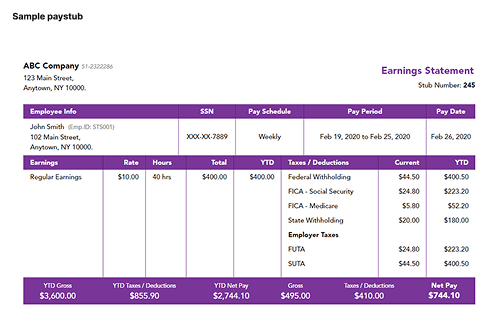
Colorado income tax is separate from federal income tax. Employees may therefore see federal income tax, Colorado income tax, Social Security tax, Medicare tax, and other payroll deductions on the same paycheck.
What Is the Colorado Income Tax Rate for 2026?
Colorado’s standard individual income tax rate is 4.4%, and the official 2026 estimated tax form uses that rate when calculating payments for income earned during 2026. The finalized rate for income earned during 2025 is also 4.4%.
Colorado’s rate can sometimes be affected by legislation or state revenue refund mechanisms. For example, the 2024 rate was temporarily reduced to 4.25%, while the 2025 rate returned to 4.4%. These rates belong to different tax years and should not be combined.
Taxpayers should use the final 2026 return instructions when filing in 2027 because future legislation or revenue adjustments could affect the rate ultimately used on the annual return.
Is Colorado Income Tax Flat or Progressive?
Colorado uses a flat income tax rather than progressive tax brackets. A taxpayer with $50,000 of Colorado taxable income and a taxpayer with $500,000 generally apply the same 4.4% state rate.
The final effective rate on gross income can still be lower than 4.4% because Colorado starts with federal taxable income and then applies state additions, subtractions, credits, and other adjustments.
Colorado Income Tax Example
Suppose a taxpayer has $80,000 of federal taxable income and has no Colorado additions, subtractions, or credits.
| CalculationAmount | |
| Federal taxable income | $80,000 |
| Colorado additions | $0 |
| Colorado subtractions | $0 |
| Colorado taxable income | $80,000 |
| Tax at 4.4% | $3,520 |
This is a simplified calculation. Retirement subtractions, tax credits, nonresident apportionment, withholding, and other items can change the final amount.
How Is Colorado Taxable Income Calculated?
Colorado taxable income generally begins with federal taxable income rather than federal adjusted gross income. Colorado additions are added, qualifying subtractions are deducted, and the 4.4% rate is then applied.
The basic calculation is:
- Complete the federal income tax return.
- Transfer federal taxable income to Form DR 0104.
- Add required Colorado additions.
- Subtract qualifying Colorado subtractions.
- Calculate tax using the applicable Colorado rate.
- Add any additional tax or credit recapture.
- Subtract credits, withholding, and estimated payments.
This calculation structure is one of the key characteristics of the Colorado individual income tax system.
Common Colorado Additions
Colorado additions increase the amount of income subject to state tax. They are generally required when Colorado does not recognize a federal exclusion or deduction.
Common additions can include:
- State income taxes deducted on the federal return
- Interest from non-Colorado state or local government bonds
- Certain federal deduction addbacks
- Qualified business income deduction adjustments
- Certain partnership and S corporation tax adjustments
Beginning with the 2026 tax year, taxpayers who claim a federal deduction for qualifying overtime compensation must add that deduction back on the Colorado return. Colorado does not require a similar addback for the federal qualified tips deduction.
Colorado also introduced a standard or itemized federal deduction addback for the 2026 tax year. Taxpayers should use the final DR 0104 instructions because these newer provisions can make Colorado taxable income higher than federal taxable income.
Common Colorado Subtractions
Colorado subtractions reduce income subject to the state tax.
Potential subtractions include:
- Pension and annuity income
- Qualifying Social Security benefits
- Military retirement benefits
- Railroad retirement benefits
- Interest from United States government obligations
- Qualifying charitable contributions
- Colorado 529 account contributions
- Certain qualifying agricultural capital gains
- Segal AmeriCorps Education Awards
- Qualifying first responder death benefits
Eligibility, income limits, and subtraction amounts vary by provision and tax year.
Who Must File a Colorado Income Tax Return?
A Colorado income tax return is generally required when a full-year resident, part-year resident, or nonresident with Colorado-source income must file a federal income tax return or has a Colorado income tax liability.
This means a taxpayer may need to file when:
- They were a Colorado resident for all or part of the year.
- They received taxable Colorado-source income.
- They were required to file a federal return.
- They owe Colorado income tax even without a federal filing requirement.
- Colorado income tax was withheld and they want a refund.
- They want to claim a refundable Colorado credit.
Full-year residents, part-year residents, and nonresidents generally use Form DR 0104. Part-year residents and nonresidents also complete Form DR 0104PN to calculate the portion of tax attributable to Colorado.
When Is the Colorado Tax Return Due?
Colorado individual income tax returns are normally due on April 15 following the end of the tax year. Income earned during 2026 will generally be reported on a return due April 15, 2027.
Colorado generally provides an automatic six-month filing extension until October 15. However, the extension provides additional time to file, not additional time to pay. Any tax due generally must still be paid by April 15.
The April 15, 2026 deadline applies to returns reporting 2025 income. It should not be confused with the filing deadline for income earned during 2026.
Colorado Residency Rules
A person is generally a Colorado resident when Colorado is their domicile or when they maintain a permanent place of residence in Colorado and spend more than six months of the year in the state.
Domicile generally means the place a person considers their permanent home. Colorado can consider factors such as:
- Voter registration
- Driver’s license
- Vehicle registration
- Property ownership
- Employment location
- School registration
- Location of a spouse or children
- Mailing and financial addresses
- The taxpayer’s intent to remain in Colorado
A person who qualifies under the six-month rule can be treated as a full-year resident.
Part-Year Residents
A part-year resident is someone who moves into or out of Colorado and changes domicile during the year.
Part-year residents are generally taxed on:
- Income received while domiciled in Colorado
- Colorado-source income received while living outside Colorado
They use Form DR 0104PN to calculate the portion of their tax attributable to Colorado.
Colorado Income Tax for Nonresidents
Nonresidents generally pay Colorado income tax only on income derived from Colorado sources.
Colorado-source income can include:
- Wages for services performed in Colorado
- Business income attributable to Colorado
- Rental income from Colorado property
- Gains from Colorado real or tangible property
- Partnership or S corporation income allocated to Colorado
- Certain deferred compensation connected with Colorado employment
A nonresident must generally file when they are required to file a federal return and have taxable Colorado-source income. Form DR 0104PN is used to apportion the tax.
Colorado Income Tax for Remote Workers
A person who physically works from Colorado generally earns income subject to Colorado tax, even when the employer is located in another state. A Colorado resident is also generally taxed on income earned while working remotely for an out-of-state employer.
A nonresident working entirely outside Colorado for a Colorado company does not generally have Colorado-source wages solely because the employer is located in Colorado.
For hybrid employees, Colorado wages are generally based on services physically performed in the state. Separate sourcing rules can apply to:
- Bonuses
- Commissions
- Stock options
- Restricted stock
- Severance payments
- Deferred compensation
- Business and partnership income
Colorado residents may qualify for a credit when the same income is also taxed by another state.
Colorado Paycheck Withholding
Colorado employers generally withhold income tax from wages paid to Colorado residents and from wages paid to nonresidents for work performed in Colorado.
Form DR 0004 is Colorado’s Employee Withholding Certificate. Completing it is optional. When an employee does not submit DR 0004, the employer generally calculates Colorado withholding using information from the federal Form W-4.
Colorado withholding can apply to:
- Salaries and wages
- Tips
- Bonuses
- Commissions
- Sick pay
- Certain fringe benefits
- Overtime compensation
Withholding is an advance payment toward the employee’s annual tax liability. It does not necessarily equal the final effective tax rate.
Colorado Estimated Tax Payments
Individuals generally must make Colorado estimated payments when they expect to owe more than $1,000 in net Colorado tax after subtracting withholding and credits.
Estimated payments commonly apply to people receiving:
- Self-employment income
- Independent contractor income
- Interest and dividends
- Rental income
- Capital gains
- Pass-through business income
- Retirement income without sufficient withholding
For 2026, Colorado’s estimated tax form uses a 4.4% rate. Payments are generally due on April 15, June 15, September 15, and January 15 of the following year.
Taxpayers can pay electronically through Revenue Online or submit Form DR 0104EP with a payment.
Colorado Capital Gains Tax
Colorado generally taxes capital gains included in federal taxable income at the same individual income tax rate as ordinary income. The state does not normally provide a separate lower rate for long-term stock or cryptocurrency gains.
This means gains from the following can generally be included in Colorado taxable income:
- Stocks
- Cryptocurrency
- Investment funds
- Business interests
- Real estate
- Other capital assets
Colorado’s special capital gain subtraction is now narrowly limited. For tax years beginning in 2022 or later, it generally applies only to qualifying farmers who recognize gains from certain Colorado agricultural real property.
To qualify, the taxpayer and property must satisfy detailed requirements, including:
- The taxpayer must generally file federal Schedule F.
- The property must be qualifying Colorado agricultural real estate.
- The property must have been held for at least five uninterrupted years.
- The taxpayer must complete Form DR 1316.
- The taxpayer must not have certain overdue state debts.
Ordinary gains from publicly traded shares, cryptocurrency, or a standard home sale do not generally qualify for this agricultural subtraction.
Does Colorado Tax Social Security and Retirement Income?
Colorado can tax retirement income included in federal taxable income, but eligible taxpayers may claim pension, annuity, Social Security, and military retirement subtractions.
Pension and Annuity Subtraction
Taxpayers ages 55 through 64 can generally subtract up to $20,000 of qualifying pension and annuity income.
Taxpayers age 65 or older can generally subtract up to $24,000. On a joint return, each spouse calculates their own eligibility and subtraction separately.
Qualifying income can include:
- Pension payments
- Annuity payments
- Certain IRA distributions
- Certain disability retirement payments
- Taxable Social Security benefits
Social Security Subtraction
Taxpayers age 65 or older can generally subtract the full amount of Social Security benefits included in federal taxable income.
Beginning with the 2025 tax year, taxpayers ages 55 through 64 can also subtract all federally taxable Social Security benefits when adjusted gross income does not exceed:
- $75,000 for a single filer
- $95,000 for joint filers
When income exceeds these limits, the regular $20,000 retirement subtraction cap generally applies.
Military Retirement Subtraction
A retired servicemember under age 55 can subtract up to $15,000 of qualifying military retirement income for tax years 2022 through 2028.
Retired servicemembers age 55 or older generally use the regular pension and annuity subtraction instead.
Colorado Tax Credits
Colorado provides refundable and nonrefundable credits that can reduce the final amount owed or increase a refund.
Colorado Earned Income Tax Credit
For the 2026 tax year and later, the Colorado Earned Income Tax Credit generally equals 25% of the qualifying federal EITC.
The percentage was 50% for the 2023 through 2025 tax years, so taxpayers should not use the 2025 percentage when planning their 2026 return.
Colorado Child Tax Credit
Colorado provides a refundable Child Tax Credit for qualifying resident taxpayers with children under age six.
General adjusted gross income limits are:
- $75,000 for single filers
- $85,000 for joint filers
The credit amount depends on income and the number of qualifying children.
Child and Dependent Care Credit
Beginning in tax year 2026, qualifying taxpayers can calculate the Colorado Child and Dependent Care Expenses Credit based on the full federal credit for which they are eligible, even when they cannot claim the full federal amount because they have no federal income tax liability.
The Colorado adjusted gross income limit is generally $60,000.
Family Affordability Tax Credit
The Family Affordability Tax Credit applies to the 2024 and 2025 tax years. Under current guidance, it is not available for tax year 2026.
What Is the Colorado TABOR Refund?
The Taxpayer’s Bill of Rights, known as TABOR, limits how much revenue Colorado may retain and can require excess revenue to be returned to taxpayers.
The TABOR refund is separate from an ordinary refund of excess income tax withholding. It is generally claimed on Form DR 0104 or through the Property Tax, Rent, and Heat Rebate application.
For the 2025 tax year, the state sales tax refund ranges from $19 to $59 for single filers and from $38 to $118 for joint filers, depending on adjusted gross income.
TABOR refund amounts change by year and should not be treated as a permanent tax credit.
Does Colorado Have Local Income Taxes?
Colorado cities do not generally impose traditional local personal income taxes based on total annual income. However, some municipalities impose occupational privilege taxes, also called head taxes, on employees and employers.
These taxes can depend on:
- Where the employee works
- Monthly compensation
- The number of cities in which services are performed
- The municipality’s local rules
Denver and certain other municipalities have local occupational tax systems administered separately from the Colorado Department of Revenue.
Employees and employers should check the rules of the specific city where work is performed, especially in remote and hybrid arrangements.
Final Summary
Colorado uses a flat 4.4% individual income tax rate. The finalized 2025 rate is 4.4%, and Colorado’s official 2026 estimated tax form also uses 4.4% for calculating payments.
Colorado taxable income generally begins with federal taxable income. State additions and subtractions are then applied before calculating the tax.
Residents generally report income from all sources. Part-year residents report income received while residing in Colorado and Colorado-source income earned while living elsewhere. Nonresidents generally report only Colorado-source income.
Taxpayers expecting to owe more than $1,000 after withholding and credits may need to make quarterly estimated payments. Colorado also provides retirement-income subtractions, refundable family credits, a state EITC, and potential TABOR refunds.
Taxpayers should pay close attention to the 2026 federal deduction addbacks, remote-work sourcing, nonresident apportionment, retirement limits, local occupational taxes, and the distinction between the finalized 2025 tax rate and planning figures for income earned during 2026.
This article provides general information and is not personalized tax or legal advice.

Alexander Caldwell – Financial Expert
Alexander Caldwell is a financial expert specializing in payroll management, with over 12 years of experience in the industry. He earned his bachelor's degree in finance from the University of California, Berkeley. Throughout his career, Alexander has worked with businesses of all sizes, helping them streamline payroll processes and ensure compliance with tax regulations. At Online Pay Stub, he is dedicated to providing accurate and reliable payroll solutions, making it easier for employees and businesses to manage their financial records efficiently.


Comments (0)
Loading comments...


